
Eye Associates Northwest — Cornea
Protecting the
Eye’s Clear Window.
The cornea focuses light onto the retina, and any change to its clarity or shape can affect vision. We diagnose and treat conditions across all three corneal layers.
- Treatment for epithelial, stromal, and endothelial corneal disease
- Management ranging from lubricating drops to corneal transplant
- Coordination with our specialty contact lens team for conditions like keratoconus
Is This Right for You?
Am I a Candidate for Cornea?
The cornea can be affected by conditions at any of its three layers. If any of the following sound familiar, it may be time for an evaluation.
Layer matters: The cornea has three main layers, epithelium, stroma, and endothelium, and symptoms often depend on which layer is affected.
The Anatomy
What Is the Cornea?
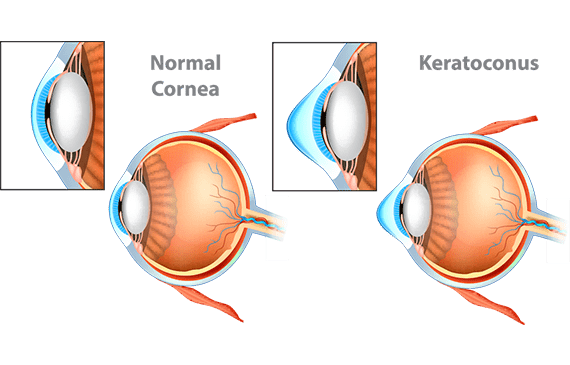
The cornea is the strong, crystal-clear front surface of the eye. Its curvature makes it a powerful lens capable of focusing light onto the retina, so anything that affects its clarity or shape can reduce vision. The cornea has three main layers: the epithelium, stroma, and endothelium. A corneal scratch damages the epithelium, which typically heals on its own, though it can occasionally heal poorly and require treatment. A weakened stroma can lead to keratoconus, where the cornea stretches into a cone shape. The endothelium keeps the cornea clear, and its gradual loss, as in Fuchs dystrophy, can lead to corneal swelling that requires a transplant.
3 Corneal Layers
Epithelium, stroma, and endothelium each treated differently
Medical First
Many conditions managed with drops or specialty lenses before surgery
Specialty Lens Coordination
In-house team fits rigid and scleral lenses for keratoconus
Long-Term Monitoring
Imaging tracks slow-progressing conditions over time
Patient Reviews
Treatment Approaches
Medical vs. Surgical Corneal Treatment
Corneal disease treatment ranges from simple lubrication to corneal transplant, depending on which layer is affected and how advanced the condition is.
Medical Management
Drops, ointments, and specialty lenses
- Lubricating ointment for recurrent erosion
- Rigid contact lenses for early keratoconus
- No surgical recovery required
- May not be sufficient for advanced disease
First-Line Treatment
Surgical Treatment
Corneal transplant or surgical correction
- Corneal transplant for endothelial failure
- Surgical correction for advanced keratoconus
- Can restore clarity when medical management is not enough
- Requires a longer recovery than medical treatment
For Advanced Disease
Your treatment plan depends on the specific corneal condition diagnosed and how it is affecting your vision.
Step by Step
Your Corneal Care Journey
From diagnosis to a treatment plan for your specific corneal condition.
1
Evaluation
- Slit lamp exam of the corneal surface
- Corneal topography or Pentacam imaging if indicated
2
Diagnosis
- Identification of which corneal layer is affected
- Discussion of medical vs. surgical treatment options
3
Treatment
- Lubricating drops or specialty lenses for milder disease
- Referral for corneal transplant if surgery is needed
4
Follow-Up
- Monitoring for disease progression
- Ongoing coordination with our specialty lens team as needed
What to Expect
Expected Cornea Outcomes & Recovery
Outcomes depend heavily on which corneal layer is affected and how early treatment begins.
What Patients Can Expect in the First 30 Days
- Some corneal conditions progress slowly and require years of monitoring
- Rigid or scleral lenses may take an adjustment period
- Corneal transplant recovery involves a longer healing timeline than most eye procedures
- Follow-up imaging scheduled to track corneal shape and clarity
Informed Care
Safety & Risk Considerations
Treatment ranges from low-risk medical management to corneal transplant surgery, which carries the risks typical of any transplant procedure.
Safety Profile
- Medical management, such as lubricating drops, carries minimal risk
- Rigid and scleral lens fitting is noninvasive
- Corneal transplant has a long track record of restoring vision in endothelial disease
Possible Side Effects
- Temporary discomfort during a recurrent erosion episode
- Reduced vision as keratoconus or endothelial disease progresses without treatment
- Extended recovery and rejection risk are possible after corneal transplant surgery
How We Minimize Risk
Layer-Specific Diagnosis
Identifying exactly which corneal layer is affected helps target the least invasive effective treatment.
Specialty Lens Coordination
Rigid and scleral lenses can delay or avoid the need for surgery in many keratoconus cases.
Careful Transplant Referral
When surgery is needed, we coordinate closely with corneal transplant specialists.
Why Eye Associates Northwest
What Sets Our Cornea Program Apart
Layer-by-layer expertise in corneal disease.
Comprehensive Corneal Evaluation
We assess all three corneal layers to pinpoint the exact cause of your symptoms.
In-House Specialty Lens Team
Many corneal conditions can be managed with specialty lenses fitted right in our practice.
Coordinated Surgical Referral
When corneal transplant is needed, we help coordinate your care every step of the way.
Find Us
Cornea in Seattle & the Puget Sound
Cornea consultations are available at our Seattle-area locations.
Coverage & Financing
Cost & Insurance
Costs vary widely depending on whether treatment is medical management or surgical, such as a corneal transplant.
Insurance Coverage
Corneal disease is a medical condition, so evaluation and treatment are typically billed to medical insurance.
- Comprehensive corneal evaluation
- Coordination with our specialty contact lens team when needed
- Referral coordination for corneal transplant surgery
- Billing support through our office
Eye Associates Northwest bills most major medical insurance plans, including Medicare and Medicaid; contact your carrier about coverage for corneal transplant or specialty lens fitting.
Self-Pay Options
Some elements of care, like elective specialty lenses, may fall outside insurance coverage.
- Pricing reviewed before treatment begins
- Multiple accepted payment methods
- Prompt-pay discount for qualifying patients
- Billing office available for questions
We accept cash, checks, Visa, MasterCard, American Express, and Discover, with a 15% prompt-pay discount for qualifying self-pay patients.
Insurance & Payment Made Simple. We bill most major medical and vision insurance plans, including Medicare and Medicaid. Patients without insurance coverage receive a 15% discount when paying in full the same day. Our billing team can answer questions about your specific coverage before your visit.
locationsCommon Questions
Frequently Asked Questions
Common questions about corneal conditions and treatment.
What is keratoconus?
Keratoconus is caused by a weakened stroma that allows the cornea to stretch forward into a cone shape, leading to a marked decrease in vision. It is often treated with rigid contact lenses, though some cases require surgical correction.
Will a corneal scratch heal on its own?
Often, yes. The epithelium constantly replaces itself and typically heals without scarring, though occasionally it heals poorly and requires treatment for recurrent erosion.
What is Fuchs Endothelial Dystrophy?
It is a gradual loss of the endothelial cells that keep the cornea clear. Once the cell count drops below a critical level, the cornea swells and becomes cloudy, which is treated surgically with a corneal transplant.
Can specialty contact lenses help with corneal disease?
Yes. For conditions like keratoconus, our specialty contact lens team can fit rigid or scleral lenses that improve vision beyond what glasses or standard contacts can achieve.
Ready When You Are
Schedule Your Free Consultation
Most patients see results within 24 hours. Consultations are available at all four locations, online scheduling takes less than two minutes.